
What Makes Original Paintings Worth Buying
Last Updated: November 8, 2026
Quick Summary
Original paintings are worth buying when the work connects with you emotionally and the price fits your budget without strain. You pay for exclusivity, since an artist cannot duplicate a finished original, so every sale removes that exact image from the market permanently. Buy because you want to live with the work, not because you expect guaranteed appreciation.
- Artist reputation is the strongest single driver of value in the art market, built from verifiable milestones rather than hype.
- An original painting is a unique physical object, while a print is a reproduction produced in multiples.
- Verify the seller, documentation, and return terms before paying when buying original art online.
- Original paintings hold value only when the artist has sustained demand and documented recognition.
- Our Ranunculas and Pomegranates oil painting at $345 suits small spaces and gifting.
Table of Contents
- Why Original Paintings Command the Prices They Do
- The Real Cost Behind a One-of-a-Kind Work
- What Makes Original Paintings Worth Buying for Beginners
- Artist Reputation, Exhibition History, and Critical Recognition
- Original Paintings vs Prints: What You Actually Get
- Materials, Craftsmanship, and Condition That Justify the Price
- How to Buy Original Art Online Without Getting Burned
- Do Original Paintings Hold Their Value?
- Provenance, Authenticity, and the Due-Diligence Checklist
- Matching Value With Your Budget and Your Walls
- Frequently Asked Questions
Why Original Paintings Command the Prices They Do
An original painting is a one-of-a-kind work of art created directly by the artist's hand, not a reproduction or digital copy. That single fact explains most of the price gap between an original and a print.
The real cost behind a one-of-a-kind work rarely shows up on the wall label. Oil paint, archival paper or canvas, framing, varnish, and studio time all add up before an artist ever names a figure. A painting cannot be repainted identically, so the buyer pays for exclusivity as much as for pigment.
Below, we break down what actually drives value in original paintings, so you can judge a price with clear eyes instead of guesswork.
The Real Cost Behind a One-of-a-Kind Work
Start with materials, because they set a floor.
The intangible cost is the part buyers underestimate. An artist cannot duplicate a finished original, so every sale removes that exact image from the market permanently. That scarcity is baked into the price from day one.
What Makes Original Paintings Worth Buying for Beginners
For beginners, original paintings are worth buying when the work connects with you emotionally and the price fits your budget without strain. You do not need to be a seasoned collector to own one. You need a clear reason for choosing that piece over a reproduction.
A common mistake is buying for prestige before buying for connection. The paintings people keep and love are the ones they chose because the colors, subject, or mood spoke to them. If you are new to collecting, start with a smaller original and learn how you live with art before scaling up.
Gifting is another honest reason to buy. For an affordable, giftable entry point tied to the artist's work, see the Roxy Rich Double R With Paintbrush Logo Wrapping Paper. A distinctive piece tied to a specific artist makes a more memorable present than a mass-produced print, and it introduces the recipient to the artist's wider body of work.
Artist Reputation, Exhibition History, and Critical Recognition
Artist reputation is the strongest single driver of value in the art market, and it is built from verifiable milestones rather than hype. Exhibition history, awards, press coverage, and gallery representation all signal that curators and critics have taken the artist seriously.
Look for documented recognition you can check yourself. A show record, magazine features, and consistent output over years tell you more than a single glowing review. Roxy Rich's work has been featured in American Art Collector Magazine, which gives a buyer a concrete reference point.
Career trajectory matters too. An artist whose work is steadily exhibited and collected tends to hold attention longer than one with a single burst of visibility. When you evaluate a painting, ask where the artist is in that arc, not just where they are today.
Original Paintings vs Prints: What You Actually Get
An original painting is a unique physical object made by the artist, while a print is a reproduction produced in multiples. That difference defines everything about ownership, from resale potential to the simple fact that no one else owns the same piece.
| Feature | Original Painting | Print or Reproduction |
|---|---|---|
| Quantity | One of a kind | Produced in multiples |
| Surface | Hand-applied paint, visible texture | Flat, printed surface |
| Resale | Depends on artist demand | Limited, generally lower |
| Price | Higher, reflects unique work | Lower, accessible entry point |
| Ownership | Exclusive to you | Shared with other buyers |
Prints have a real place: they let you enjoy an artist's imagery at a lower price and dress a wall affordably. But a print will never carry the texture, depth, or exclusivity of an original. If you want a genuine piece of an artist's hand, only the original delivers that.
Materials, Craftsmanship, and Condition That Justify the Price
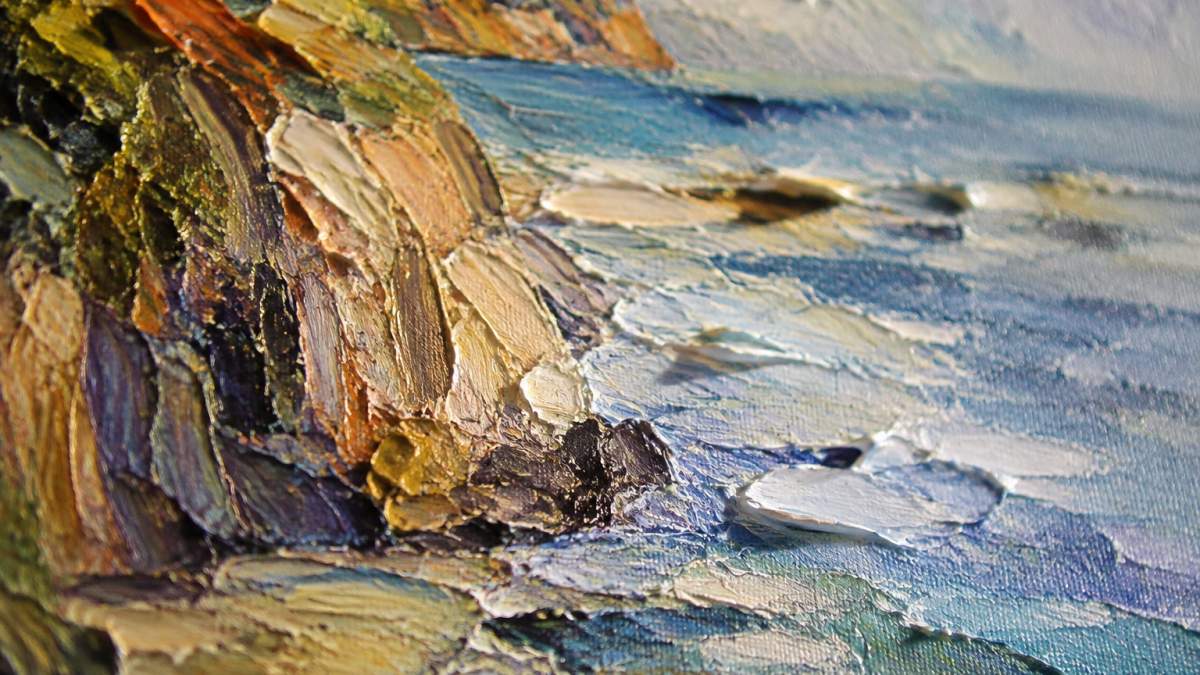
Craftsmanship is where a price earns its justification. Thick, deliberate brushwork, layered color, and a stable, well-prepared surface all point to an artist who controls the medium rather than fighting it. Run your eye across the surface at an angle; genuine texture catches light in a way prints cannot fake. A piece like the Original Oil Painting Lemons On A Branch Printed On Glass Cutting Board shows the kind of medium and craftsmanship described here.
Condition matters just as much. Check for cracking, flaking, or yellowed varnish, and ask how the piece has been stored. A well-preserved painting on archival materials will outlast a cheaper one by decades. Framing and varnish quality are also part of the value, not decorative extras.
How to Buy Original Art Online Without Getting Burned
Buying original art online works well when you verify the seller, the documentation, and the return terms before you pay. The convenience is real, but so is the risk of a disappointing arrival if you skip due diligence. The difference between a smooth purchase and an expensive lesson usually comes down to a repeatable process, not luck.
Start by identifying which channel you are buying through, because each one carries different protections. A gallery typically provides a written invoice, a certificate of authenticity, and a return window, and it may stand behind the work if a question arises later. An auction house gives you a public sales record and condition reports, but buyer's premiums, as-is sales, and shipping logistics add cost and complexity. None of these channels is automatically safer; the paperwork and terms are what protect you.
Use this sequence before you pay:
- Confirm who you are actually buying from. Ask whether the seller is the artist, an authorized gallery, or a reseller, and request the business name, address, and a phone number you can call. A marketplace listing alone is not verification.
- Request high-resolution photos in natural light, including close-ups of the surface texture, the signature, the back of the canvas or panel, and the frame. Ask for a photo of the certificate of authenticity next to the painting so you can confirm they match.
- Get the documentation in writing. At minimum, ask for a certificate of authenticity that names the artist, title, medium, dimensions, and year, plus the artist's signature. For higher-priced works, ask for the provenance record, any appraisal, and the condition report.
- Read the shipping, insurance, and return policy in full before checkout. Confirm who insures the piece in transit, what the deadline is for reporting damage, and whether returns are accepted and who pays return shipping.
- Pay through a method that gives you a dispute process. Credit cards and established payment platforms offer chargeback options that wire transfers and peer-to-peer apps generally do not.
- Ask what happens after the sale. A serious seller will explain how to hang, light, and care for the piece, and will confirm that the certificate travels with the work.
Watch out: a seller who pressures you to pay off-platform, refuses close-up photos, or cannot produce a certificate in writing is giving you a reason to walk away, no matter how good the listing looks.
For a broader walkthrough of vetted sellers, see our guide to the best online galleries for original art. It helps you compare reputable sources before you commit to a purchase.
Do Original Paintings Hold Their Value?
Original paintings hold their value when the artist has sustained demand, documented recognition, and a track record of sales. They are not a guaranteed investment, and anyone who promises steady appreciation is overselling. Treat resale as a possibility, not a plan.
The honest picture is a range, not a promise. Some works appreciate when an artist's career gains momentum, many hold roughly steady in line with what comparable pieces sell for, and some lose value if the artist's market cools or if the work falls out of fashion. The price you pay at retail is not the price you can expect to recover quickly, because retail pricing includes the gallery's margin and the artist's time, neither of which transfers automatically to a resale buyer.
Liquidity is the real catch, and it is the part buyers underestimate. Selling a painting can take months, and the sale usually involves costs that eat into any gain. Auction houses commonly charge a seller's commission and may also charge a buyer's premium that affects what bidders will pay. Galleries typically take a consignment percentage. Online marketplaces charge listing or transaction fees. Shipping, insurance, and framing costs may also come out of your proceeds. A work that looks like it gained value on paper can return less than expected once those costs are subtracted.
Before you buy, ask yourself three practical questions. First, who is the likely buyer if you ever sell: a collector of this artist, a decorator, or a general auction audience? Second, is there a documented record of comparable sales for this artist's work, and at what prices? Third, how long has the artist been producing and exhibiting, and is demand steady or concentrated in a single moment? The answers tell you more about resale potential than any prediction.
Buy because you want to live with the work. If it also gains value, that is a bonus, not the reason to buy.
Provenance, Authenticity, and the Due-Diligence Checklist
Provenance is the documented ownership history of a piece, and it is your best defense against fakes and misattribution. A clean chain of ownership, paired with a certificate of authenticity and the artist's signature, gives you confidence that the work is genuine.
Use this checklist before any purchase:
- Certificate of authenticity included and matches the piece
- Artist's signature present and consistent with known work
- Documented ownership history or gallery sales record
- High-resolution photos of the signature, back, and frame
- Clear return policy and insured shipping confirmed
- Independent appraisal considered for higher-priced works
A common mistake is skipping the certificate because the seller seems trustworthy. Get it in writing every time. Documentation is what protects you if you ever resell or insure the piece.
Matching Value With Your Budget and Your Walls
Value in art is personal as much as financial. A painting is worth buying when it fits your space, your taste, and your budget without stretching you thin. Measure your wall first, then let the room guide scale and color.
Smaller originals are a smart entry point. A piece like the Original Loose Watercolor Floral Red Roses Painting on a latte mug shows how art-derived pieces bring an artist's vision into daily life at a modest price. For a true original, our Ranunculas and Pomegranates oil painting at $345 suits small spaces and gifting, while larger framed works anchor a room.


If you are weighing how originals and reproductions differ in practice, the Fluffy Birds original painting printed on a glass cutting board makes the distinction tangible. And for collectors ready to step up, our Autumn Retreat original oil landscape at $11,500 includes a certificate of authenticity and ships framed and ready to hang.

The hardest part of buying original art is trusting that the piece will look as good in your home as it does on screen. Roxy Rich Fine Art removes that risk with insured shipping included to the continental USA, a certificate of authenticity with original masterworks, and a 30-day money-back guarantee on print purchases. Browse the collection and choose the piece that speaks to you, then add it to your cart with confidence.
Frequently Asked Questions
What makes an original painting valuable?
Value comes from a mix of factors: the artist's reputation and exhibition history, the rarity of the work within their body of work, the materials and craftsmanship, and documented provenance. A signed original oil on archival paper, backed by a certificate of authenticity, carries value a reproduction cannot. Demand from collectors and comparable sales records also shape fair market value, so research the artist's career trajectory before you buy.
Are original paintings worth buying compared to prints?
Original paintings are one-of-a-kind, so you own something no one else can replicate. Prints are affordable reproductions, often produced in editions. If you want a specific image at a low price, a print works. If you want exclusivity, texture you can see in raking light, and a piece that can appreciate with the artist's career, an original painting justifies the higher cost. Many collectors start with prints and move to originals as their budget grows.
How can you tell if a painting is an original or a print?
Look closely at the surface. An original oil or acrylic shows raised texture, visible brushstrokes, and uneven paint depth. A print usually has a flat, uniform surface and may show a dot pattern under magnification. Check the back for canvas stretchers or paper texture, and ask for a certificate of authenticity. A signature alone is not proof; documentation and the artist's own sales channel are stronger signals.
Do original paintings hold their value over time?
Some do, many do not. Value depends on the artist's career trajectory, collector demand, and resale liquidity in the secondary market. Works by artists with growing exhibition history and gallery representation tend to hold value better. Treat an original painting as a long-term hold with uncertain resale, not a guaranteed investment. Buy what you love first, and let appreciation be a bonus rather than the reason.
What should you look for when buying an original painting online?
Check the shipping and insurance terms, and confirm the dimensions, medium, and framing details before you buy. Read the return policy carefully. Buy from the artist directly or a reputable gallery with a documented sales record. Verify the artist's exhibition history and press features, and request provenance details if the work has changed hands before.
Why are original paintings more expensive than prints?
An original painting is a single object made by hand over many hours, using materials like professional-grade oils and archival paper. There is only one, so supply is fixed at one. A print is reproduced mechanically and sold in editions, which spreads the cost across many buyers. The price gap reflects labor, materials, exclusivity, and the artist's reputation, not just the size of the image.
